We hear it from Democratic strategists and centrist pundits all the time.
“Democrats need to have a big tent.”
Typically, this means Democratic candidates should appeal to moderates and the seven remaining Republican voters who don’t support Donald Trump. And indeed, that was what Kamala Harris did in her abbreviated presidential run. She campaigned with Liz Cheney, backed a Republican-drafted immigration crackdown, incessantly touted her prosecutions of transnational drug gangs, and conspicuously gave no indication she’d stop arming Israel as it was ethnically cleansing Gaza. She heeded the advice of longtime Democratic strategists by playing it safe, which included a directive to stop referring to Trump et al. as “weird.” She eschewed any boat-rocking positions and instead spoke about the need to create an “opportunity economy,” which is exactly the kind of vague and soulless elevator pitch that Democratic consultants think resonates with voters.
It was the big tent of consultants’ dreams. The problem is that not enough people showed up.
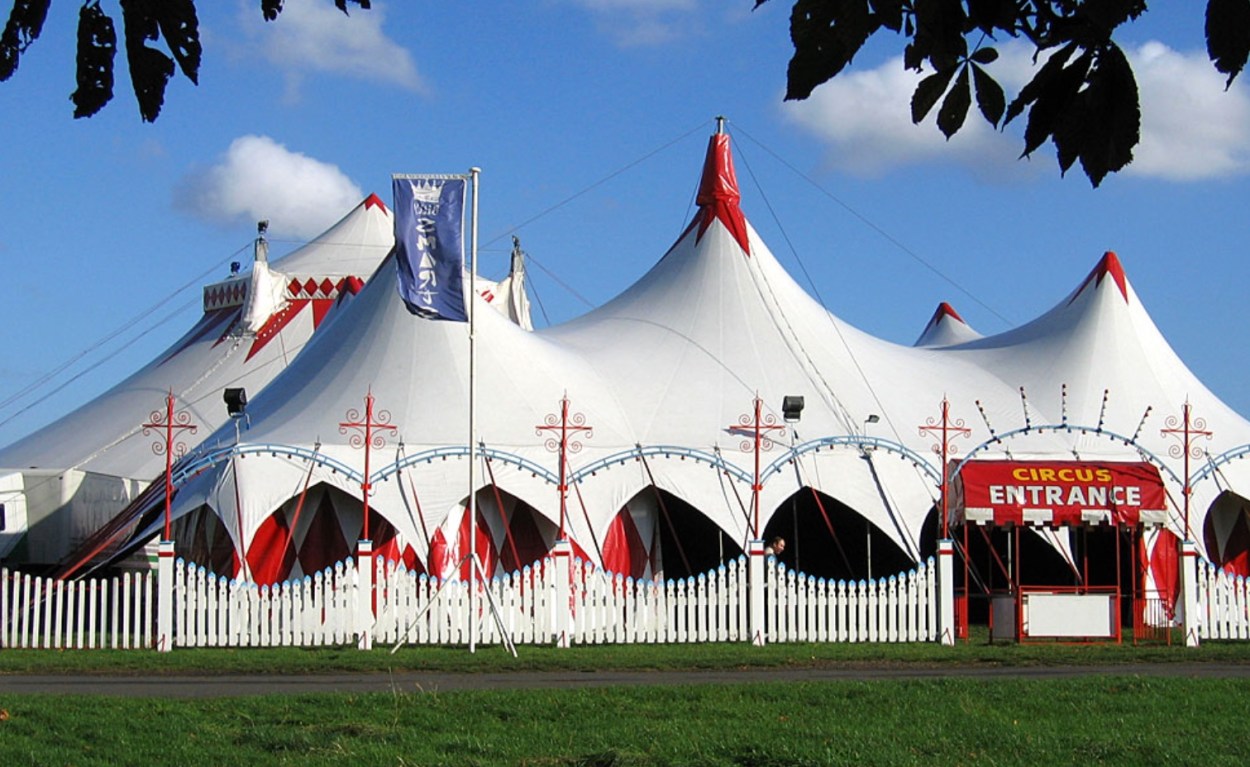
What gets forgotten in the “big tent” metaphor is the reason tents are erected in the first place: to accommodate a bunch of people who want to see a show, like say, a circus.
But the important thing to remember is that no one goes to the circus to admire the tent. No normal person says, “Why, what a large and lovely tent this is,” as they ignore the performances on display and pay no thought to the cotton candy and fried dough. But Democratic consultants and centrist pundits aren’t normal people, which is why they thought Liz Cheney’s endorsement was a big get for Democrats. They were impressed with the size of the tent and the room to supposedly accommodate different groups. Indeed, reporters and pundits suffering from Terminal Centrist Brain truly believed that Cheney’s endorsement would create a “permission structure” for like-minded Republican voters to be impressed by the size of the Harris tent and walk on in.
But on election night, more people opted for the Trump circus even though he didn’t give two shits about tents and never has.
On the very day Trump announced his first presidential bid on June 16, 2015, he completely repudiated Republicans’ “big tent” plan that the party drew up after losing in 2012. The GOP’s now-abandoned autopsy, a massive report compiled after thousands of surveys and dozens of focus groups – exactly the kinds of exercises consultants love – concluded that the party should ditch hardline immigration rhetoric, tone down the culture war stuff, and generally cultivate an image of a more inclusive party.
Trump did the exact opposite. Shortly after descending the escalator at Trump Tower, he railed against the Mexican “rapists” coming across the border. In another speech, he suggested banning Muslims from the U.S. until we “can figure out what the hell is going on.” Elsewhere, Trump said there has to be “some form of punishment” for women who get abortions. For good measure, he denigrated the military service of John McCain, a member of his own party, whose other presidential candidates he trashed and humiliated mercilessly.
It was the most divisive high-profile presidential campaign since George Wallace’s 1968 bid. And it worked. The small consolation for Democrats at the time was that Hillary Clinton received nearly three million more votes, but because of the idiotic way we elect presidents, Trump won in something of a fluke. This idea, reinforced in 2020 after Trump botched the Covid response and lost soundly to Joe Biden, persisted into the 2024 cycle, when it was widely believed that the former president could never come close to cracking 50% of the popular vote.
On the campaign trail, he did nothing to disabuse people of that hypothesis. A week after Trump announced his third run, he dined with white nationalist and Holocaust-denier Nick Fuentes at Mar-a-Lago. And in speech after speech, he singled out various demographics to tell them that if they voted for Harris, they should have their “head examined”:
“Any African American or Hispanic that votes for Kamala… you got to have your head examined.”
“Any Catholic that votes for Comrade Kamala Harris should have their head examined.”
“If any senior doesn’t vote for Trump, we’re gonna have to send you to a psychiatrist to have your head examined.”
“Any Jewish person that votes for Kamala, or a Democrat, should immediately have their head examined.”
In other words, all the people in these groups who supported Harris – ultimately tens of millions of voters – were mentally defective at best, morons at worst. He even went so far as to say that if he lost, Jews would be partly to blame. Speaking in front of a pro-Israel group in September, he bemoaned his low approval rating among Jewish voters and preemptively blamed them in the event he were to lose:
“So I’m not going to call this as a prediction, but in my opinion, the Jewish people would have a lot to do with a loss if I’m at 40%.”
There was nothing “moderate” about the Trump campaign, and no Democratic consultant would describe it as a “big tent” operation. Yet, it didn’t matter. Trump won, nearly notching a majority of the popular vote with 49.8%. It’s not advisable to go around demeaning voters the way Trump did, but it was hardly a hindrance. He improved his numbers with most demographics, including among the Black and Latino voters he told needed to have their brains checked if they supported Harris.
Across various blocs, more voters simply preferred Trump’s circus despite the fact that he didn’t care about tents. Above all, the man is a showman and knows that if a show is good enough, people from all walks of life will come to see it, whether it’s inside a tent or not.
 Autocracy Manifest